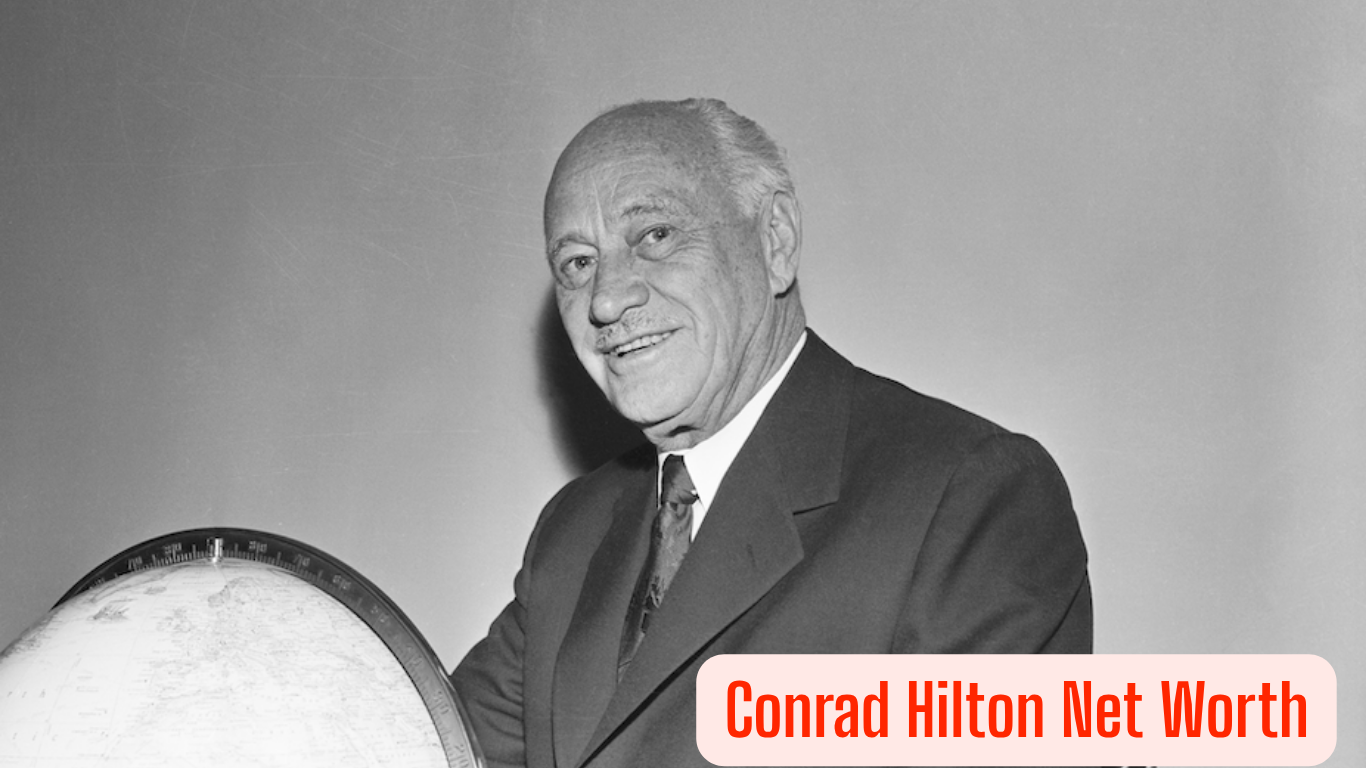
When Conrad Nicholson Hilton died in 1979, he left behind a $1 billion fortune—a staggering sum that crowned him as one of America’s most successful entrepreneurs. But the true value of his legacy extends far beyond this financial figure. From a single 40-room hotel in Texas, Hilton pioneered the first international hotel chain, creating a global hospitality empire that redefined travel and luxury accommodations forever. His journey through bankruptcy, epic recoveries, and visionary expansion reveals a story of resilience, innovation, and profound humanitarian commitment that continues to shape the world decades after his passing.
From Humble Beginnings: The Making of a Hotelier
Conrad Hilton was born on December 25, 1887, in San Antonio, New Mexico Territory, to a Norwegian immigrant father and a German-American mother. His early education in business came not from elite institutions but from working at his father’s general store, which also functioned as a 10-room boarding house—his first exposure to the hospitality industry .
Before hotels, Hilton pursued varied paths including serving as a Republican representative in New Mexico’s first state legislature and serving in the U.S. Army during World War I . His life took a decisive turn in 1919 when, with the intention of buying a bank in Texas during the oil boom, he instead purchased the Mobley Hotel in Cisco, Texas for $40,000 when the bank deal fell through . The Mobley’s incredible success—with rooms turning over three times daily—revealed the extraordinary demand for lodging and set Hilton on his destined path .
Building an Empire: The Hilton Hotel Revolution
Hilton demonstrated his business acumen immediately, converting the hotel dining room into additional rooms to meet overwhelming demand . He began systematically expanding throughout Texas, opening hotels in Dallas (1925), Abilene (1927), Waco (1928), and El Paso (1930) .
The Great Depression nearly wiped out his growing chain, costing him several properties and bringing him to the brink of bankruptcy. Yet, in a remarkable display of resilience, he retained management of the combined chain and eventually regained control of his remaining eight hotels . This recovery paved the way for unprecedented expansion.
Hilton’s strategic acquisitions became legendary in the industry:
- 1946: Founded Hilton Hotels Corporation, the first hotel company listed on the New York Stock Exchange
- 1949: Acquired the Waldorf-Astoria in New York City, which he famously declared “the greatest of them all”
- 1954: Purchased The Hotels Statler Company for $111 million—the largest real estate transaction in history at that time
Under his leadership, Hilton Hotels introduced numerous industry innovations that became hospitality standards, including the first centralized reservation system (1948), first airport hotel (1959), and first coast-to-coast chain . By the peak of his career, Hilton owned 188 hotels across 38 U.S. cities and 54 international properties, establishing the world’s first truly global hotel chain .
Conrad Hilton’s Net Worth: Wealth Beyond the Balance Sheet
At the time of his death in 1979, Conrad Hilton’s net worth stood at $1 billion . This fortune derived primarily from his ownership of the Hilton hotel chain, but also included strategic investments in other ventures such as the Carte Blanche Credit Company and American Crystal Sugar Company .
His real estate holdings included the magnificent Casa Encantada in Bel Air, Los Angeles, which he purchased in 1950 for $225,000 and described as “a case of love at first sight” . This property would later sell for millions, demonstrating his eye for valuable assets beyond the hotel industry.
Table: Conrad Hilton’s Financial Legacy at a Glance
The Humanitarian Vision: A Philanthropic Legacy
Conrad Hilton’s philosophy extended beyond profit to purpose. He once stated, “Prayer has been the best investment I have ever made” . This conviction in divine guidance and human potential shaped his approach to wealth.
In 1944, he established the Conrad N. Hilton Foundation with a mission to “alleviate human suffering worldwide” . In a powerful decision that surprised many, his last will bequeathed the bulk of his estate to this foundation rather than to his children . His personal gifts to family members were comparatively modest: $500,000 to his siblings, $100,000 to his daughter Francesca, and $10,000 to each niece and nephew .
This philanthropic commitment created tensions, particularly with his son Barron Hilton, who contested the will. A settlement eventually granted Barron 4 million shares of the hotel enterprise, while the Conrad N. Hilton Foundation received 3.5 million shares . In a remarkable continuation of this legacy, Barron Hilton later announced he would leave 97% of his own fortune—estimated at $2.36 billion—to the same foundation . This decision meant that heirs like Paris and Nicky Hilton would not receive shares of the $4-5 billion family wealth .
Today, the Hilton Foundation controls approximately $6 billion in assets and has donated over $2 billion to various charities worldwide . It annually awards the Conrad N. Hilton Humanitarian Prize—now $2.5 million—which remains the world’s largest annual humanitarian award .
The Hilton Family Fortune: Contemporary Wealth Distribution
While Conrad Hilton dedicated most of his wealth to philanthropy, his descendants have still achieved significant financial success through various ventures:
- Barron Hilton (Son): As chairman and CEO, he expanded the Hilton empire dramatically, culminating in the $26 billion sale to Blackstone Group in 2007 . True to his father’s philanthropic vision, he left 97% of his estate to the Hilton Foundation .
- Paris Hilton (Great-Granddaughter): Has built a $300 million fortune through savvy business ventures including fragrance lines, fashion collections, DJ performances, and media appearances . Her business ventures have generated over $4 billion in cumulative sales .
- Nicky Hilton Rothschild (Great-Granddaughter): Has amassed a $100 million net worth through her fashion lines, modeling career, and authorship .
- Kathy and Richard Hilton (Granddaughter-in-law and her husband): Boast a combined net worth of $350 million through real estate (Hilton & Hyland brokerage) and various business ventures .
These contemporary fortunes demonstrate how family members have successfully built upon rather than relied upon Conrad Hilton’s original legacy.
Conclusion: More Than a Billion-Dollar Empire
Conrad Hilton’s net worth of $1 billion tells only a small part of an extraordinary story. His journey from a New Mexico territory to international hospitality pioneer embodies the American Dream. More importantly, his strategic vision transformed global travel, his resilience through adversity inspired generations, and his philanthropic commitment created an enduring humanitarian legacy.
The Conrad N. Hilton Foundation continues his mission with billions in donations, while the hotel chain that bears his name continues to expand with new luxury properties like the Waldorf Astoria New York reopening in 2025 and new locations in Costa Rica, Osaka, and Athens . Conrad Hilton proved that true wealth is measured not just in financial capital, but in vision, impact, and the courage to dream big. As he once said, “Man with God’s help and personal dedication is capable of anything he can dream” —a philosophy that built both a billion-dollar empire and a humanitarian legacy that continues to change lives worldwide.
Disclaimer: The net worth figures and financial information presented in this article are based on publicly available sources and estimates. These values may fluctuate over time and should be considered approximations rather than exact accounting.
5 FAQs
1. How much of his fortune did Conrad Hilton actually leave to his family?
Contrary to what many might expect, Conrad Hilton left the bulk of his $1 billion estate to the Conrad N. Hilton Foundation. His will provided specific, but relatively modest, cash gifts to his immediate family: $500,000 to his siblings, $100,000 to his daughter Francesca, and $10,000 to each of his nieces and nephews. This decision was based on his strong belief that his wealth should be used to “alleviate human suffering worldwide.”
2. Did his son, Barron Hilton, inherit the Hilton Hotel company?
Not directly from Conrad’s will. Barron Hilton initially contested his father’s will, which had left most of the hotel shares to the foundation. A settlement was eventually reached, granting Barron control of 4 million shares, which allowed him to become the company’s leader. In a move that honored his father’s philanthropic vision, Barron later announced that he would leave 97% of his own multi-billion dollar fortune, derived from those shares, back to the Hilton Foundation.
3. If Conrad Hilton left his wealth to charity, how are Paris Hilton and other descendants so wealthy?
The contemporary wealth of Hilton family members like Paris and Nicky Hilton is self-made, built through their own successful business ventures—not from inheritance from Conrad Hilton’s estate. Paris Hilton, for example, has built a $300 million fortune through her fragrance lines, fashion collections, and media career. Their wealth demonstrates how the family has built upon, rather than relied upon, Conrad’s original legacy.
4. What was Conrad Hilton’s most significant business acquisition?
While he made many strategic purchases, his acquisition of The Hotels Statler Company in 1954 for $111 million stands out as his most significant. At the time, it was the largest real estate transaction in history. This landmark deal dramatically expanded the Hilton empire’s footprint and solidified its dominance in the American hotel industry.
5. What is the Conrad N. Hilton Foundation, and what does it do today?
The Conrad N. Hilton Foundation is a philanthropic organization established by Conrad Hilton in 1944. Today, it controls approximately $6 billion in assets and has donated over $2 billion to charitable causes worldwide. Its mission is to alleviate human suffering by supporting work in areas like safe water, homelessness, and global health. It is also famous for awarding the annual Conrad N. Hilton Humanitarian Prize, which, at $2.5 million, is the world’s largest annual humanitarian award.