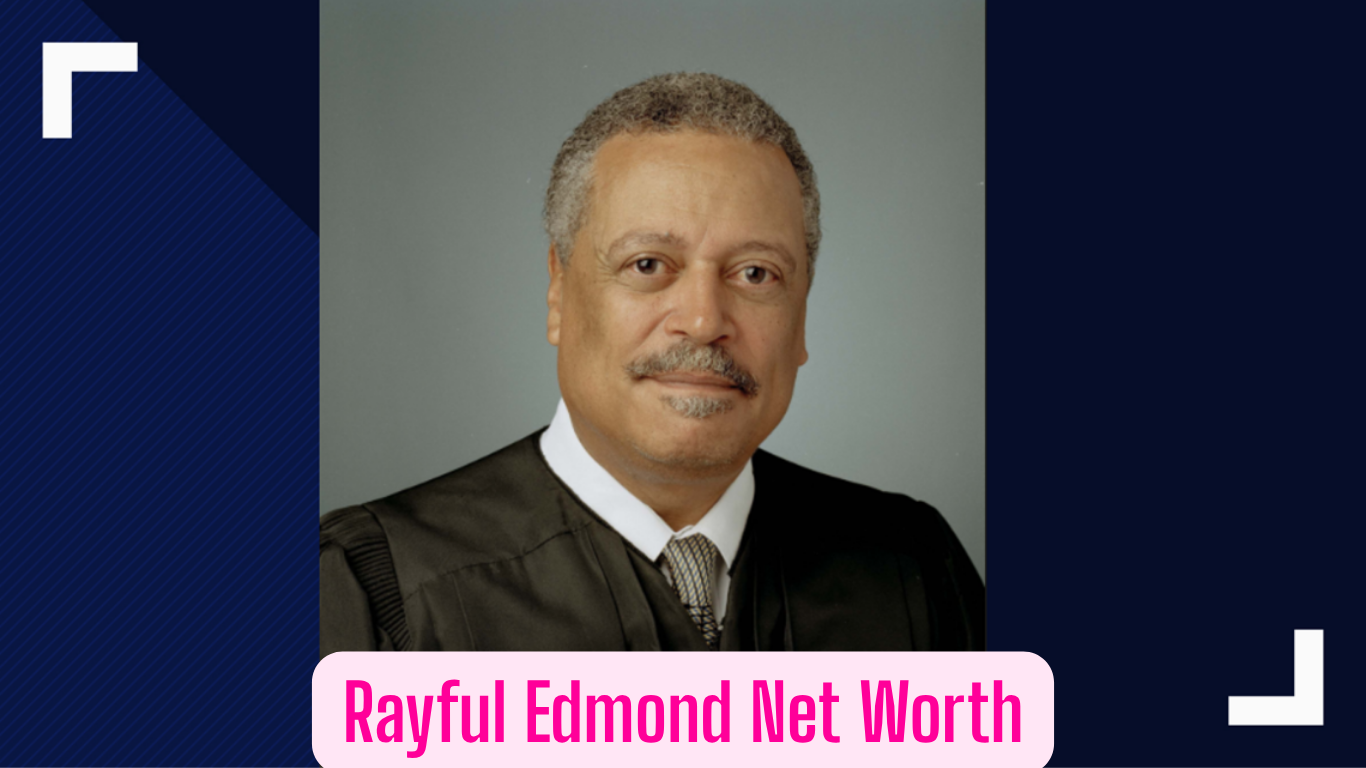
Rayful Edmond III’s net worth reached an estimated $50 million at its peak, built from a drug empire that controlled nearly one-third of Washington D.C.’s cocaine market in the 1980s. His criminal enterprise generated staggering revenues of $2 million per week—equivalent to over $300 million annually—making him one of the wealthiest and most powerful criminals in American history. Despite his conviction and imprisonment, Edmond’s story remains a compelling tale of immense wealth, devastating social impact, and unexpected redemption.
The Meteoric Rise of a Criminal Mastermind
Rayful Edmond III was born on November 26, 1964, in Washington D.C. to government worker parents who themselves engaged in low-level drug dealing. Introduced to the drug trade as early as age nine, Edmond was bagging pills and serving as a runner for his parents, gaining firsthand experience in narcotics distribution that would foreshadow his future criminal career.
Edmond attended Dunbar High School where he was voted “most popular” and “best dressed,” excelling both academically and at basketball. He briefly studied at the University of the District of Columbia and worked as a cook before turning to the drug trade full-time, recognizing its potential for rapid wealth accumulation. As he once stated, “My mother always wanted a nice big house, and I wanted to be able to buy that for her one day”.
Building a Criminal Empire: Scale and Operations
At the height of his power in the late 1980s, Edmond’s drug organization operated with breathtaking scale and sophistication:
Edmond’s business model was remarkably sophisticated for its time. He established connections with Los Angeles-based dealer Melvin Butler, who had direct ties to Colombia’s powerful Cali Cartel. This supply chain allowed Edmond to import massive quantities of cocaine into Washington D.C., which his organization would then distribute across the city, primarily in predominantly Black neighborhoods near Gallaudet University and H Street NE.
Rayful Edmond Net Worth: $50 Million Fortune
Various sources estimate Rayful Edmond’s peak net worth at approximately $50 million, a figure that places him among the wealthiest American criminals in history. This estimation appears on a list that includes other notorious figures like Frank Lucas ($52 million) and John Gotti ($30 million).
This enormous wealth accumulation becomes particularly striking when considering the timeframe—Edmond built this fortune before his arrest at age 24, meaning he amassed approximately $50 million in just a few years of intensive drug trafficking.
Money Laundering and Extravagant Spending
Edmond laundered his illicit profits through various channels, most notably through Charles Wynn’s exclusive Georgetown store, Linea Pitti, where Edmond spent an astonishing $457,619 on Italian men’s clothing. Wynn was later convicted on 34 counts of money laundering for his role in helping Edmond legitimize his drug profits.
His spending habits became the stuff of legend in Washington D.C. circles:
- Luxury Vehicles: A collection of high-end cars
- Designer Jewelry: Custom-made, gold-laced accessories
- Gambling Junkets: Frequent trips to Las Vegas and Atlantic City where he wagered huge sums
- Travel: Regular cross-country trips and luxury vacations
- Basketball Games: Courtside seats at Georgetown Hoyas games with his entourage
The Lavish Lifestyle and Public Persona
Despite his criminal activities, Edmond maintained a surprisingly public profile in Washington D.C. He was known to coach youth basketball teams and frequently passed out $100 bills to neighborhood children. This Robin Hood-like persona—flaunting his wealth while simultaneously giving back to his community—created a complex legacy where some residents viewed him as a local hero rather than a criminal.
His high profile eventually drew the attention of Georgetown University basketball coach John Thompson, who famously confronted Edmond about his relationships with Hoyas players John Turner and Alonzo Mourning. In a testament to Edmond’s respect in certain circles, he complied with Thompson’s request to stay away from the players, later stating, “Coach Thompson is cool as hell”.
The Dramatic Downfall and Legal Consequences
Edmond’s empire began to crumble on April 15, 1989, when federal agents arrested him on a 43-count indictment. His trial was conducted under unprecedented security measures—jurors’ identities were kept secret, their seating area was enclosed in bulletproof glass, and Edmond was transported daily via helicopter from the maximum-security Marine Corps Brig at Quantico.
In September 1990, Edmond was convicted on multiple federal charges including engaging in a continuing criminal enterprise, conspiracy to distribute cocaine, and unlawfully employing minors in drug trafficking. He received multiple life sentences without parole, effectively ending his criminal career at just 25 years old.
Continued Operations from Prison and Final Years
Remarkably, Edmond continued to direct drug operations even while incarcerated at the Lewisburg Federal Penitentiary in Pennsylvania. There he connected with Osvaldo “Chiqui” Trujillo-Blanco, son of Griselda “Godmother” Trujillo Blanco, and established a new partnership that moved approximately 400 kilograms of cocaine per month—actually exceeding his pre-incarceration trafficking volume.
When caught in 1996, Edmond struck a deal to become a government informant, providing information that led to numerous arrests and reforms in the federal prison system. His cooperation eventually earned him a reduced sentence, and on July 31, 2024, he was transferred to a halfway house. Just months later, on December 17, 2024, Edmond died of a heart attack at age 60.
The Complex Legacy of Rayful Edmond
Rayful Edmond’s story represents both the devastating impact of the crack cocaine epidemic on urban communities and the complex social dynamics that allowed drug kingpins to become folk heroes in their neighborhoods. His $50 million net worth came at an enormous social cost—at least 30 murders were tied to his organization, and Washington D.C. earned the grim title of “murder capital of the United States” during his reign.
Yet, decades after his conviction, Edmond’s case remained polarizing. In 2019, a survey by the District of Columbia Attorney General showed that half of D.C. residents believed Edmond should be released. This surprising support stemmed from his extensive cooperation with authorities and the perception that he had reformed during his 35 years of incarceration.
Conclusion: The Broader Implications
The story of Rayful Edmond’s net worth extends beyond mere numbers—it offers a window into the economics of the drug trade, the social conditions that enable its proliferation, and the complex legacy of those who profit from it. While his $50 million fortune purchased temporary luxury, it ultimately came at tremendous personal and societal cost. Edmond’s trajectory from kingpin to informant to deceased halfway house resident serves as a poignant chapter in American criminal history, reflecting both the allure and ultimate emptiness of ill-gotten gains.
Disclaimer
The information presented in this article is based on publicly available sources and is intended for educational and historical purposes only. All figures related to Rayful Edmond’s net worth and criminal operations are estimates based on court documents, media reports, and historical accounts. The actual amounts may vary from these estimates. The inclusion of this content does not glorify or endorse criminal activity in any form. Readers should be aware that drug trafficking and related activities are illegal and have devastating consequences for individuals and communities. All financial estimates are presented in nominal historical values and have not been adjusted for inflation.
FAQs
1. How did Rayful Edmond manage to operate so publicly without immediate arrest?
Edmond’s initial ability to operate openly was due to a combination of factors. He cultivated a Robin Hood-like image in his community by coaching youth basketball and giving away money, which built local loyalty and deterred cooperation with police. More crucially, his organization used sophisticated tactics like employing juveniles (who faced lighter penalties) as runners, using payphones to avoid wiretaps, and instilling fear through violence, which silenced potential informants for a time. This allowed his empire to grow significantly before law enforcement could build an airtight case.
2. Was the estimated $50 million net worth his actual cash value?
No, the $50 million figure is an estimate of the total value of his assets and illicit earnings at his peak, not the amount of cash he had on hand. This valuation includes his massive spending on luxury cars, designer clothing, jewelry, gambling, and real estate. A significant portion of this wealth was also reinvested back into the business to purchase more product. Much of his tangible assets were seized by the government upon his arrest, meaning his actual liquid cash was only a fraction of this estimated net worth.
3. Why is there public sympathy for someone who caused so much harm?
The public sympathy for Rayful Edmond is complex and stems from several reasons. Some in his community saw him as a rare example of Black economic success in an era of limited opportunities, who also gave back to the neighborhood. Decades later, this was compounded by his extensive cooperation with authorities, which helped dismantle other criminal operations and led to prison reforms. Many who support his release view it as a recognition of his redemption and the extraordinary length of his sentence (over 30 years) for a non-violent drug conviction.
4. How was he able to continue his drug operations from inside a maximum-security prison?
The federal prison system in the 1990s, while secure, was not the hyper-monitored environment it is today. Edmond used coded language in letters and exploited the privileges of phone calls and visits from associates to communicate. Most importantly, he formed a new alliance with a powerful fellow inmate, Osvaldo Trujillo-Blanco, whose family connections to the Cali Cartel provided a new, even more robust supply chain that operated largely outside the prison walls.
5. What ultimately led to his release from prison?
Rayful Edmond was never fully “released” in the traditional sense. His life sentence was commuted due to his substantial assistance to authorities. After being caught running drugs from prison in 1996, he chose to become a confidential informant. The information he provided was so valuable—leading to numerous convictions and exposing corruption within the Bureau of Prisons—that the government petitioned the court for a sentence reduction. This resulted in his transfer to a halfway house in 2024, a direct consequence of his decades of cooperation.